
Lipedema: Symptoms and Effective Treatments
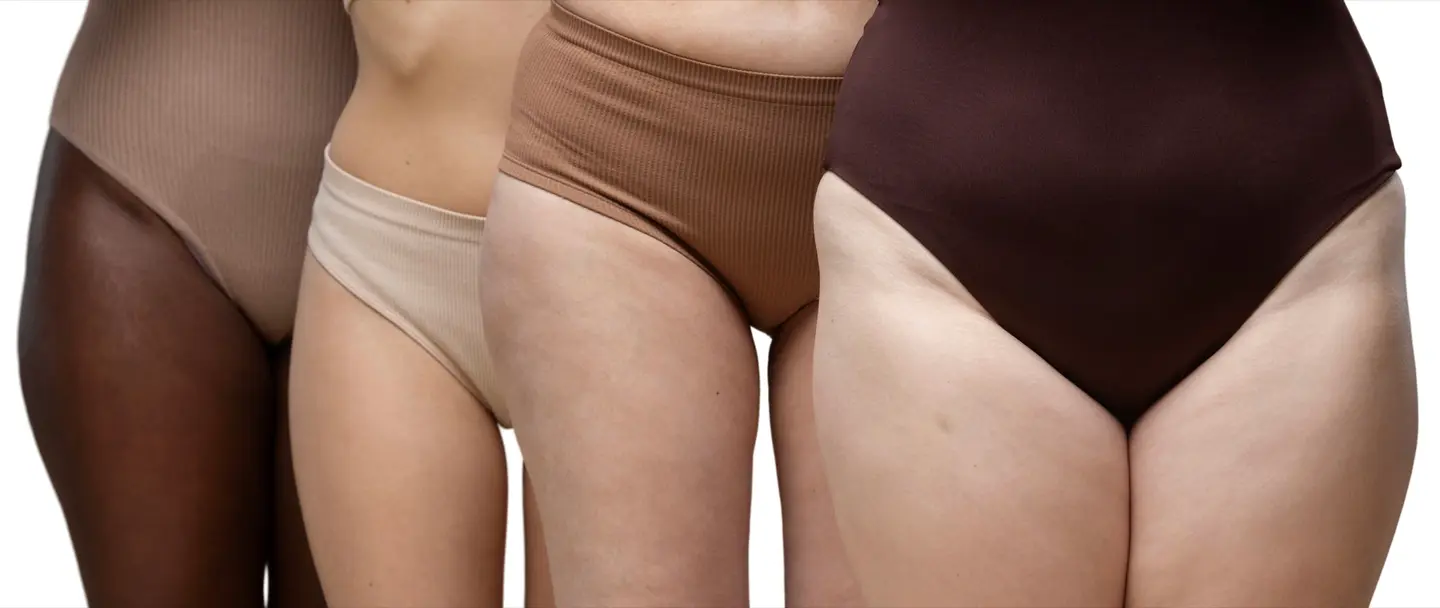
Lipedema is a chronic disorder of fatty tissue that occurs almost exclusively in women and causes fat to accumulate in an unusual pattern, most often in the thighs, buttocks, hips and lower legs.
Unlike ordinary excess weight, the fat affected by lipedema generally does not respond to diet or physical activity.
For this reason, more and more women are looking for answers to the questions “What is it?” and “Which treatments can actually help?”
What is lipedema?
Lipedema is a medical condition in which fatty tissue gradually accumulates in the legs and arms. The feet and hands usually remain slim, giving the body unusual proportions.
What causes lipedema?
No single clear cause of lipedema has been identified. Research suggests that the condition is likely to be linked to:
- Genetics. Studies have identified certain genetic changes that may be associated with abnormal growth and function of fatty tissue.
- Hormones, particularly an imbalance of oestrogen and progesterone. The condition often starts or worsens during puberty, pregnancy, the period after childbirth or menopause.
- Changes in the lymphatic system and blood vessels, including slower lymph flow and increased permeability of blood vessels.
- Inflammatory processes in the body. Researchers have found more inflammatory cells and changes in immune responses in tissue affected by lipedema. These may contribute to the progression of the condition and increased sensitivity to pain.
- Pain mechanisms. Pain is one of the main symptoms of lipedema. Research suggests that it may be related both to pressure or swelling in the tissues and to changes in nervous system sensitivity and inflammatory processes.
It is important to understand that lipedema is more than simply “bad genes” or excess weight. It is a complex medical condition whose development may be influenced by a combination of hormonal, genetic, circulatory, lymphatic and fatty tissue changes.
Symptoms of lipedema
- Disproportionate fat accumulation in the legs or arms.
- Pain at the surface or under the skin, or both, extending around the whole arm or leg rather than affecting isolated spots.
- Increased sensitivity to pressure and touch in the affected areas.
- A tendency to bruise easily, associated with changes in small blood vessels.
- Lipedema responds little to diet or physical activity.
- The feet usually remain slim, making the legs look as if they are “separate” from the feet.
Clinicus Klaipėda
These symptoms can progress over time, so it is important to seek medical advice in good time.
Stages of lipedema
Lipedema is generally divided into three stages:
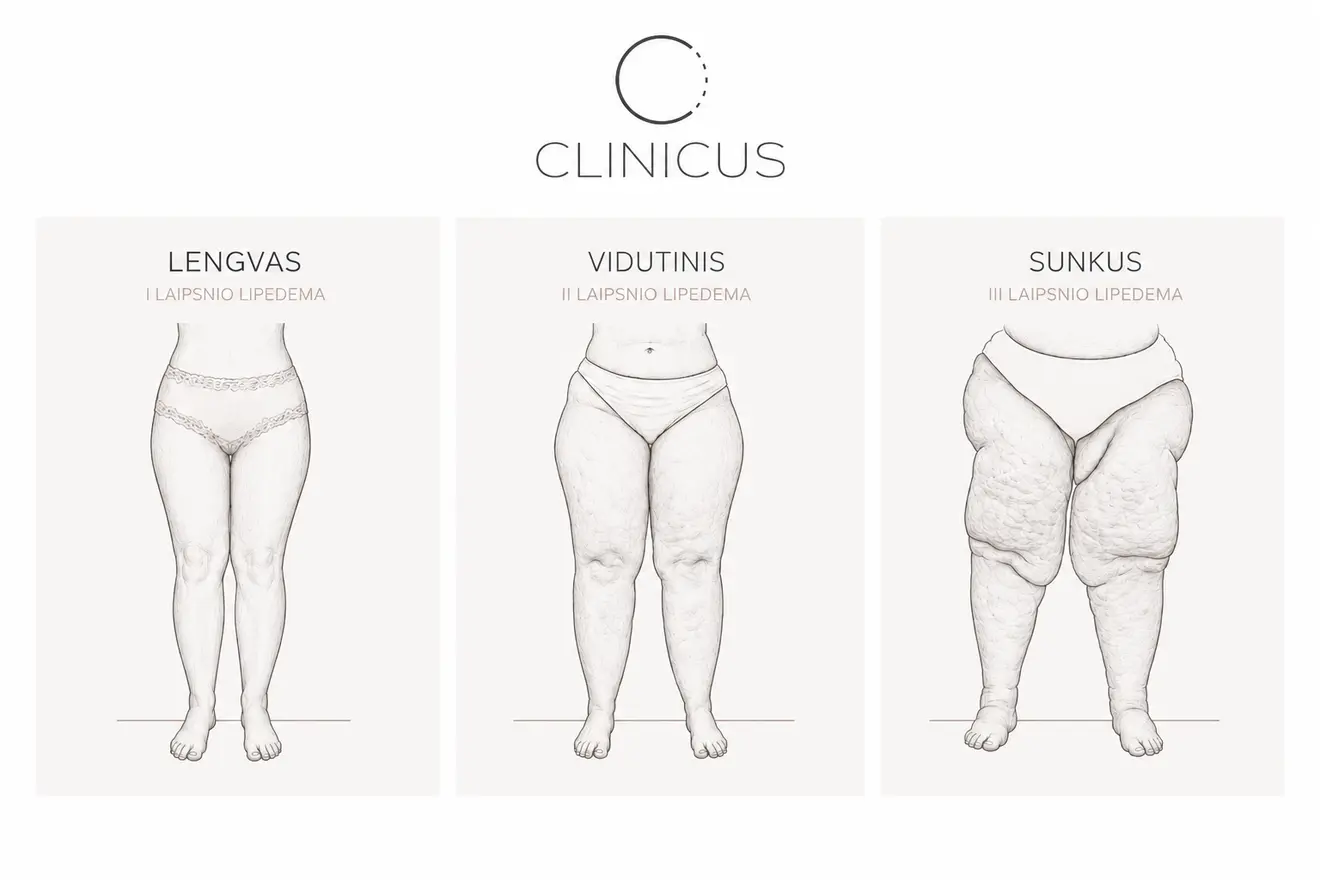
Mild (stage I) · Moderate (stage II) · Severe (stage III)
The earlier lipedema is diagnosed, the easier it is to manage its progression.
The stage of lipedema does not always reflect the true severity of the condition. Even at stage two, a patient may experience pain, sensitivity or a decline in quality of life just as severe as at the more advanced third stage.
How do lipedema, lymphedema and cellulite differ?
Lipedema, lymphedema and cellulite can look similar, but they are three different conditions.
As described above, lipedema is a chronic disorder of fatty tissue in which fat accumulates disproportionately in the legs or arms, causing pain and frequent bruising, while the feet or hands usually remain slim.
Lymphedema occurs when the lymphatic system does not function properly. Fluid builds up in the limbs, causing pronounced swelling that often also affects the feet or hands.
Cellulite, meanwhile, is a change in the structure of the skin. Fatty tissue beneath the skin gives its surface an uneven, “orange peel” appearance, but cellulite does not usually cause pain or progressive fat accumulation.
Distinguishing between these conditions is important because lipedema treatment, lymphedema therapy and cellulite correction require different medical approaches.
How is lipedema diagnosed?
Lipedema is usually diagnosed during a clinical consultation. The doctor assesses the distribution of fatty tissue, the texture of the skin, tenderness and other characteristic signs.
What does effective lipedema treatment involve?
1 Can lifestyle changes alone cure lipedema?
The short answer is not always. Although diet and exercise often do not remove the fat affected by lipedema, a healthy lifestyle can help considerably:
- It reduces inflammation and pain.
- It improves lymph flow.
- It helps prevent weight gain in other parts of the body.
- It improves overall well-being and mental health.
Without treatment, the condition can progress. Lifestyle changes therefore play a supporting role rather than serving as the main treatment.
2 Treatment at an early stage
Conservative therapy is always recommended first to help reduce discomfort and swelling. It may include compression therapy, pressotherapy, lymphatic drainage massage, physical activity and lifestyle changes.
It is important to understand that these methods relieve symptoms without eliminating the cause of lipedema. Many patients still do not experience enough relief or a meaningful improvement in their quality of life.
Surgical treatment for lipedema is then considered.
3 Surgical treatment for lipedema
Specialised liposuction is currently considered the most effective method. During the procedure, the affected fatty tissue is removed while the surrounding tissues are preserved.
This significantly reduces pain, improves mobility and slows the progression of the condition. Many patients experience considerable relief after surgery and can return to an active life.
Lipedema treatment at Clinicus Klaipėda
Lipedema treatment requires both modern technology and experienced specialists. At Clinicus Klaipėda, patients can receive a thorough consultation, an accurate diagnosis and an individual treatment plan.
The doctors here specialise in body contouring surgery, including liposuction, the surgical treatment used for lipedema.
The liposuction techniques used in lipedema surgery are WAL (water-assisted liposuction) and PAL (power-assisted liposuction using a vibrating cannula). Clinicus Klaipėda uses the PAL method.
Lipedema surgery at Clinicus Klaipėda: cost
Estimated cost of lipedema surgery:
Liposuction
| Service | Price EUR |
|---|---|
| Liposuction (1 area: abdomen/waist/back, thighs, knees) | from 2200 |
| Liposuction of an additional area | from 900 |
The exact cost can vary depending on the area treated, the stage of the condition and the extent of the procedure.
The first step towards an easier life
If you are wondering whether your symptoms could be related to lipedema, the most important step now is to consult a specialist. During the consultation, we assess your symptoms, discuss treatment options and decide whether surgery for lipedema is needed.
Sometimes one conversation with a doctor can bring more clarity than years of trying to solve the problem on your own.
Contact us on +370 665 14000 or at [email protected]